
Engineering Data Systems Were Not Designed To Work Together
Simulation, testing, and operational systems produce incompatible data structures. Key Ward provides the missing infrastructure layer that makes these systems interoperable.

Engineering systems
.odb
.cgns
.rst
.cas
.dat
.csv
.mat
.tdms
.hdf5
SQL
Logs
.bin
.parquet
.json
Key Ward Engineering Data Infrastructure

Workflow Engine
Automate reusable engineering investigations and analytics workflows.
Unified data sets

Filter
Feature Extraction
model
insight
Saved Pipeline
Reusable across datasets
Modeling Engine
Train models using built-in ML capabilities or custom AI frameworks.

or integrate & augment with your existing ML stack
Knowledge Engine
Capture and reuse engineering insights across the organization
dataset
investigation
Insight
Stored Knowledge
Search / Retrieve
Reuse Investigation
Once a pipeline is built, it runs on every new dataset
rEUSE
Engineering knowledge compounds instead of being rebuilt.
Engineering teams are already achieving measurable productivity improvements with Key Ward
60%
faster time to insight vs. manual data preparation workflows
90%
reduction in simulation and compute costs
4–5
hours saved per cycle vs. manual data handling
70%
faster RFQ resolution versus traditional engineering workflows
/ The Key Ward Flywheel
Engineering Knowledge that Compounds
Every investigation generates valuable insights. Key Ward captures failure patterns, investigation workflows, engineering datasets and trained models. Instead of disappearing into reports, they become searchable engineering knowledge. Every dataset, workflow, and model built in the platform becomes reusable across the organization.
More datasets → More workflows → More insights → Faster investigations.
Over time, organizations build a growing library of engineering workflows and datasets that continuously accelerate engineering decision-making.
Data Connect
Fuse Multi-Source Engineering Data
Key Ward provides the missing infrastructure layer that connects and organizes engineering data across the product lifecycle, delivering a shared foundation for superior engineering analysis.
Data hub
Engineering Data Is Not Tables
Key Ward’s Data Hub structures engineering data into reusable datasets that preserve full engineering context, linking geometry, physics, test conditions, and operational behavior into a unified representation. Instead of generic tables, engineering data becomes a shared, reusable engineering asset, not just stored, but structured for analysis, investigation, and insight.
workflow engine
Standardize and Reuse Engineering Workflows
Key Ward enables automated workflow execution through a unified system layer. The Key Ward Workflow Engine converts ad-hoc scripts and notebooks into deterministic, reusable engineering data pipelines, standardizing how simulation and testing data is prepared, validated, and analyzed.
Modeling Engine
Build and Deploy Engineering Models
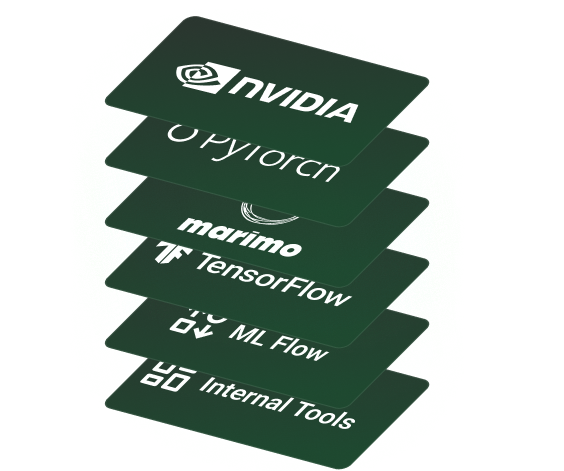
Key Ward provides built-in machine learning capabilities designed for engineering datasets, including: regression and statistical models, surrogate modeling workflows, optimization models, and anomaly detection models. Advanced teams integrate seamlessly with existing machine learning environments, such as PyTorch, TensorFlow, custom Python models, and internal ML pipelines.
Knowledge engine
Operationalize Engineering Knowledge
Every investigation generates valuable insights. Key Ward captures: failure patterns, investigation workflows, engineering datasets, and trained models. Instead of disappearing into reports, investigation outcomes and insights become searchable engineering knowledge enabling engineering organizations to learn faster with every investigation.
/ features
Purpose-Built for Engineering Data
Most organizations have powerful engineering tools, but lack the infrastructure needed to organize and reuse the data those tools produce. Key Ward fills this gap by structuring engineering data and automating workflows across the product lifecycle.
.svg)
Engineering Data Connectivity
Connect and explore simulation, testing, manufacturing, and in-service data from engineering tools, proprietary formats, files, and APIs.

Structured Engineering Datasets
Transform fragmented engineering files into structured datasets that support repeatable analysis.

Automated Engineering Workflows
Run standardized engineering processes that leverage reusable data pipelines.
.svg)
Reusable Engineering Intelligence
Capture engineering expertise in repeatable workflows that scale across programs.

AI-Ready Engineering Data
Prepare reusable structured datasets for machine learning and physics-based models.
Cross-Lifecycle Insight
Compare simulation, testing, production, and in-service performance.
Leading Engineering Organizations Gain an Advantage with Key Ward
60%
faster time to insight vs. manual data preparation workflows
90%
reduction in simulation and compute costs
4–5
hours saved per cycle vs. manual data handling
Modeling
"I think the platform is capable of building a model that has the likelihood of bringing down the time needed for a loop to 2–3 hours, thus contributing to reducing the RFQ time from 1.5 months to days. And it's got a great interface to it as well."

Andrew Dragon
Sr. Staff Development Engineer, BorgWarner PDS

Validation
"We generated data across seven simulation and test environments. Key Ward connects all of it automatically; structured, queryable, and ready for Al/ML with dashboards that give stakeholders instant visibility. Groundbreaking for any data-drive engineering team. We are already seeing fruits and can't wait until we are fully migrated with all our data in one place!"

Dr. Jeremy Howard-Knight
Head of Business Development

Concept
“Key Ward, currently deployed across two European locations, enables Autoneum to turn internally generated engineering, test, and formulation data into AI-ready, interoperable assets. The data used is produced with Autoneum's own materials and measurement systems. This ensures full data protection while allowing us to systematically unlock the value of our own engineering knowledge.”

Dr. Thibault Lafont
Technical Expert, Acoustics

Production
"I see a big potential for time saving during investigation and diagnosis work for complex processes with many variables , HSCB is a good example. With Key Ward we have a way to shortcut some investigations, such as into scrap rate and reject rate, and make the improvements earlier than we do today."

Adam Taylor
Manufacturing Engineer, BorgWarner Bradford (UK)
Modeling
“Key Ward helped our engineering program move beyond brute-force simulation using structured data and reduced order models to optimize aerodynamics faster, at a lower cost, and at scale"

Dr. Yuchen Leng
Lead Aerodynamics Engineer

Modeling
”Key Ward helped FEV turn simulation data into reusable engineering intelligence that enabled faster convergence, lower cost experimentation, and scalable CFD workflows.”

/ security
Key Ward is committed to protecting its customers with the most up-to-date secure and privacy-compliant solutions available
Our dedicated security team adheres to strict global standards and regulations, ensuring Key Ward's software security processes are in compliance with industry standards, maintained and verified.
.svg)
Controlled Access
Manage access to datasets, workflows, and analysis results across engineering teams. Ensure defined users can access the right data - without exposing sensitive information across programs.

Data Governance and Traceability
Track dataset lineage, maintain version history, and ensure full transparency across engineering workflows. Understand how data is created, transformed, and used across every stage of analysis and modeling.

Protected Engineering IP
Safeguard sensitive engineering data within a secure, controlled platform environment. Reduce risk associated with fragmented files, manual processes, and uncontrolled data sharing.
/ integrations
Interoperable Engineering and ML Stacks
Key Ward does not replace your tools. It structures and connects engineering data so your existing systems, pipelines, and machine learning models can operate across simulation, testing, and real-world workflows.
.svg)
Fuse Engineering Data
Combine simulation, test, and operational data into unified engineering datasets
.svg)
No Rip-and-Replace Required
Work with your existing data infrastructure (Snowflake, Databricks, internal engineering data repositories)
.svg)
Scale AI Without Rebuilding
Use Key Ward tools or your own machine learning stack on structured data - without rebuilding pipelines
